Introduction china pakistan economic corridor
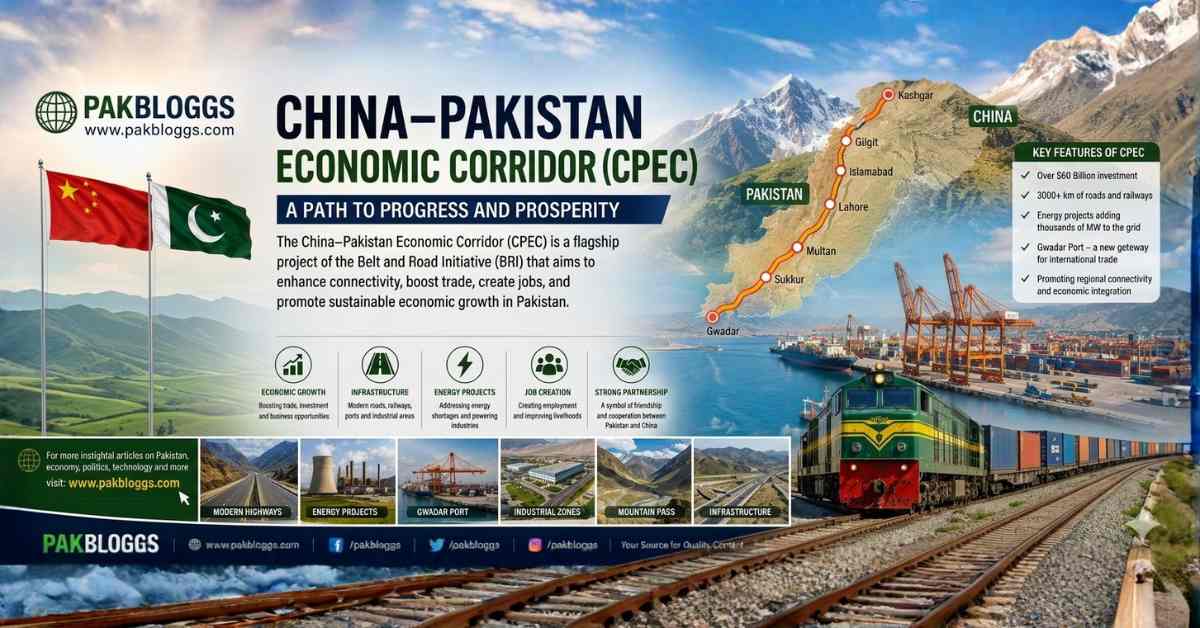
The china–pakistan economic corridor CPEC is one of the most significant development projects in Pakistan’s history. It is a major part of China’s Belt and Road Initiative (BRI), which aims to improve trade and connectivity between Asia, Europe, and Africa. Officially launched in 2015, CPEC represents a long-term partnership between China and Pakistan and includes billions of dollars in investments in infrastructure, energy, transportation, and industrial development China Pakistan Economic Corridor CPEC.
CPEC connects China’s Xinjiang region to Pakistan’s Gwadar Port in Balochistan through a network of highways, railways, and energy projects. The corridor provides China with direct access to the Arabian Sea, while Pakistan benefits from economic investment, improved infrastructure, and job opportunities.
China Pakistan Economic Corridor CPEC
One of the main goals of CPEC is to strengthen Pakistan’s economy by solving major infrastructure and energy problems. Before CPEC, Pakistan faced severe electricity shortages that affected industries, businesses, and daily life. Under the project, several power plants were established, including coal, solar, hydro, and wind energy projects. These initiatives have helped improve electricity generation and reduce load shedding in many parts of the country.
China–Pakistan Economic Corridor (CPEC)
Infrastructure development is another major achievement of CPEC. Modern motorways, highways, and road networks have improved transportation across Pakistan. Important projects such as the Multan–Sukkur Motorway and the Karakoram Highway expansion have made travel and trade easier between cities and regions. Improved transportation systems can help businesses move goods more efficiently, increasing economic activity throughout the country.
Gwadar Port is considered the heart of the China–Pakistan Economic Corridor. Located in Balochistan along the Arabian Sea, the port has strategic importance for both Pakistan and China. Gwadar has the potential to become a major trade and shipping hub in the region. Supporters believe the port can attract international trade, investment, and tourism, helping Pakistan strengthen its economy in the long term. The China–Pakistan Economic Corridor (CPEC) serves as a pivotal framework for enhancing regional connectivity and economic collaboration. By facilitating infrastructure development and fostering trade relations, CPEC aims to unlock the vast potential of Gwadar Port, positioning it as a key gateway for maritime commerce. The initiative is anticipated to bolster economic growth in Pakistan while simultaneously advancing China’s strategic interests in South Asia. Ultimately, the success of CPEC could lead to increased prosperity and stability in both nations.
China Pakistan Economic Corridor CPEC
CPEC has also created employment opportunities for thousands of Pakistanis. Many workers, engineers, technicians, and laborers have found jobs through infrastructure and energy projects. Industrial zones planned under CPEC are expected to increase manufacturing activities and encourage foreign investment in Pakistan.
Despite its benefits, the project has also faced criticism and challenges. Some experts have raised concerns about Pakistan’s increasing debt and financial dependence on China. Others have questioned transparency in agreements and the unequal distribution of project benefits among provinces. Security has also remained a major concern, especially in Balochistan, where attacks on workers and installations have occurred in recent years.
Environmental concerns have also been discussed, particularly regarding coal-based energy projects and their long-term impact on climate and pollution. Critics argue that Pakistan should focus more on renewable energy sources for sustainable development.
China Pakistan Economic Corridor CPEC
However, both Pakistan and China continue to describe CPEC as a symbol of strong friendship and economic cooperation. Leaders from both countries believe the corridor can improve regional connectivity and strengthen trade routes across Asia. Many analysts see CPEC as a project that could transform Pakistan into a regional economic hub if managed effectively.
The success of CPEC largely depends on transparency, proper planning, security, and ensuring that local communities benefit from development projects. Economists believe that if Pakistan continues improving governance and infrastructure, CPEC could play a major role in boosting trade, industrial growth, and employment opportunities in the future.
FAQs About China–Pakistan Economic Corridor (CPEC)
1. What is the China–Pakistan Economic Corridor (CPEC)?
The China–Pakistan Economic Corridor (CPEC) is a major development project between China and Pakistan that focuses on improving infrastructure, trade, energy, and economic cooperation.
2. When was CPEC launched?
China–Pakistan Economic Corridor (CPEC)CPEC was officially launched in 2015 as part of China’s Belt and Road Initiative (BRI).
3. What is the main purpose of CPEC?
The main purpose of China–Pakistan Economic Corridor (CPEC) is to improve regional connectivity, strengthen Pakistan’s economy, develop infrastructure, and provide China with direct access to the Arabian Sea through Gwadar Port.
4. Why is Gwadar Port important in CPEC?
Gwadar Port is strategically important because it connects trade routes between China, Pakistan, and international markets through the Arabian Sea.
5. How does CPEC benefit Pakistan?
China–Pakistan Economic Corridor (CPEC)benefits Pakistan by:
- Creating jobs
- Improving roads and highways
- Increasing electricity production
- Encouraging foreign investment
- Boosting trade and economic growth
6. What are the major projects under CPEC?
Major CPEC projects include:
- Gwadar Port development
- Motorways and highways
- Railway upgrades
- Energy and power plants
- Special Economic Zones (SEZs)
7. What challenges does CPEC face?
CPEC faces challenges such as security concerns, debt issues, project delays, environmental concerns, and political criticism.
8. How can CPEC impact Pakistan’s future?
Experts believe CPEC can transform Pakistan into a regional trade and economic hub by improving infrastructure, increasing industrial growth, and attracting international investment.
conclusion,
the China–Pakistan Economic Corridor is more than just an infrastructure project. It represents a strategic partnership aimed at economic growth, regional connectivity, and modernization. While challenges remain, CPEC continues to offer opportunities that could shape Pakistan’s economic future for decades to come.