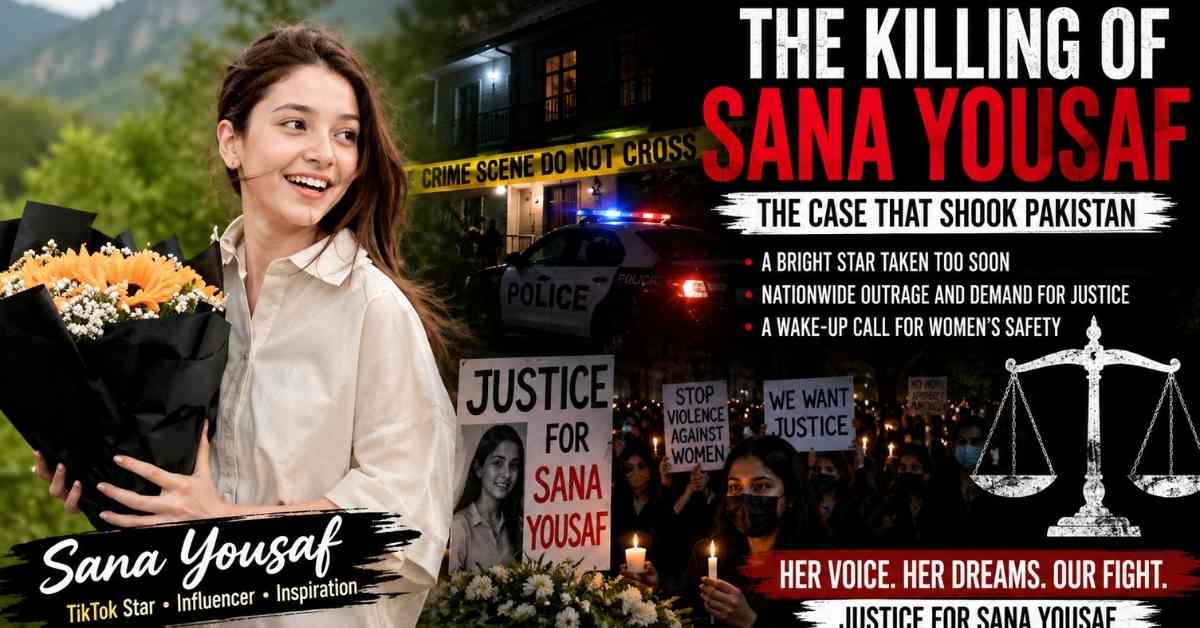
Who Was Sana Yousaf?
Sana Yousaf was a young Pakistani social media influencer from Upper Chitral. She gained popularity on TikTok and Instagram through videos that highlighted traditional Chitrali culture, fashion, music, and positive messages about education and women’s empowerment.
She reportedly had hundreds of thousands of followers across social media platforms and had become particularly popular among young audiences in Pakistan. Sana was admired for her confidence, cultural pride, and ability to connect with people online.
According to reports, she also dreamed of studying medicine and serving her country in the future. Her family described her as kind-hearted, ambitious, and socially active.
Sana Yousaf’s Rise on Authorities arrested a 22-year-old suspect named Umar Hayat in connection with the murder.Social Media
Sana Yousaf became well known because of her relatable and culturally rich content. Unlike many influencers who focused only on entertainment trends, Sana often showcased traditional Chitrali clothing and music. This made her stand out in Pakistan’s growing digital creator community.
Her content reflected:
- Cultural identity
- Youth empowerment
- Confidence among young women
- Positive representation of northern Pakistan
- Advocacy for girls’ education
Many followers viewed her as a symbol of modern Pakistani youth balancing tradition and progress.
Her growing popularity also brought increased visibility, which unfortunately exposed her to online harassment and unwanted attention — a challenge faced by many female influencers worldwide.
Her Influence on Pakistani Youth
Sana represented a new generation of Pakistani content creators who use digital platforms for self-expression.
Many young women looked up to her for her confidence and influential presence across social media platforms.
Many social media users said her videos encouraged girls to:
- Pursue education
- Express themselves freely
- Take pride in cultural heritage
- Build careers online
After her death, her social media profiles were flooded with tributes, condolence messages, and widespread calls for justice.
The emotional response highlighted how deeply connected online audiences had become to her life and work.
The Day of the Murder
According to police reports and media sources, the murder occurred at Sana Yousaf’s residence in Islamabad’s G-13 sector in June 2025.Reports stated that the accused entered the residence armed with a pistol.
The attack shocked the country because it happened in broad daylight and inside her own home — a place where she should have been safest.
Sana had recently celebrated her birthday and had posted content online shortly before the tragic incident.
This made the tragedy even more devastating for her followers, many of whom had seen her active on socialedia just hours before her death.
What Happened Inside the House
Reports revealed disturbing details about the incident. According to investigators:
- Sana was shot twice in the chest
- Family members were present in the house
- The attacker allegedly tried to escape immediately after carrying out the shooting.
- Neighbors later helped transport her for medical treatment
Unfortunately, she died before receiving emergency care.
Her family later stated that they had no knowledge of any serious threats against her before the murder.
The brutality of the crime intensified public anger and led to widespread calls for stronger protections for women and online creators.
Police Investigation and CCTV Evidence
Islamabad Police launched a major investigation soon after the murder. Authorities reportedly used:
- CCTV footage
- Digital evidence
- Witness statements
- Mobile phone tracking
- Surveillance data
Police officials stated that CCTV footage showed the suspect leaving the area shortly after the attack. Investigators were able to identify and arrest the accused within a short period of time.
The speed of the investigation received praise from many observers, though activists argued that prevention is more important than post-crime response.
Arrest of the Main Suspect
Police arrested a 22-year-old man, Umar Hayat, in relation to the murder case. According to police, he had allegedly attempted to contact Sana repeatedly before the incident.
Investigators claimed:
- The suspect had repeatedly tried to communicate with her
- Sana reportedly rejected his advances
- He allegedly became angry after facing rejection
Police described the killing as “cold-blooded” and linked it to repeated rejection.
The case quickly became symbolic of a larger issue: violence against women who refuse unwanted attention or relationships.
Motive Behind the Killing
The alleged motive behind the killing became one of the most discussed aspects of the case.
Authorities stated that the suspect became frustrated after repeated rejection. According to reports, he allegedly stalked Sana online and attempted to contact her multiple times.
This sparked debate about:
- Male entitlement
- Obsession culture
- Digital stalking
- Violence triggered by rejection
- Safety of women online
Women’s rights activists argued that the case reflected a dangerous social mindset in which some men struggle to accept rejection respectfully.
Court Proceedings and Trial
The case moved through Islamabad courts over several months. During proceedings:
- The accused was formally charged
- Witness statements were recorded
- Identification parades were conducted
- Digital and forensic evidence was presented
At one point during the trial, reports indicated that the accused withdrew parts of his earlier statements and alleged that he had been falsely implicated in the case.
However, the prosecution continued to present evidence collected during the investigation.
The trial remained under heavy public attention because it represented a major test for Pakistan’s justice system in cases involving violence against women.
Death Sentence Announcement
In May 2026, an Islamabad court sentenced the convicted individual to death in the Sana Yousaf murder case. Reports also mentioned additional prison penalties and financial fines.
The verdict was welcomed by many people who believed justice had finally been delivered.
Sana’s family reportedly expressed satisfaction with the court’s decision and thanked supporters who stood with them throughout the legal process.
However, activists emphasized that punishment alone cannot solve the broader social problems connected to gender-based violence.
Public Reaction Across Pakistan
The murder triggered massive outrage across Pakistan. Social media platforms were flooded with:
- #JusticeForSanaYousaf campaigns
- Tributes from influencers
- Celebrity reactions
- Women’s rights activism
- Protest demonstrations
Several protests were organized demanding justice and stronger laws protecting women from violence and harassment.
At the same time, disturbing victim-blaming comments also appeared online, which further fueled public debate.
Many Pakistanis strongly condemned those comments and argued that no woman should ever be blamed for violence committed against her.
Debate About Women’s Safety
The killing intensified concerns about women’s safety in Pakistan.
Activists pointed out that many women:
- Face online stalking
- Receive threats
- Experience harassment
- Feel unsafe reporting abuse
- Lack institutional protection
The case became part of a larger national conversation about:
- Gender violence
- Honor-based crimes
- Cyber harassment
- Weak enforcement systems
- Patriarchal attitudes
Women’s rights groups demanded reforms in both law enforcement and digital platform safety measures.
Toxic Masculinity and Rejection Violence
One of the most painful discussions following the case involved toxic masculinity and rejection violence.
Experts argued that some societies teach men to:
- Expect control over women
- View rejection as humiliation
- React aggressively when denied attention
The Sana Yousaf case became an example of how dangerous these attitudes can become when combined with obsession and emotional instability.
Psychologists and activists stressed the importance of teaching:
- Emotional regulation
- Respect for consent
- Healthy communication
- Gender equality
- Respectful rejection acceptance
Social Media’s Role in the Case
Social media played a dual role in the tragedy.
Positive Role
- Helped spread awareness quickly
- Pressured authorities for fast action
- Created support networks
- Amplified justice campaigns
Negative Role
- Enabled stalking behavior
- Spread misinformation
- Encouraged victim blaming
- Increased harassment
This raised important questions about how digital platforms should protect creators, especially young women with large audiences.
Media Coverage and International Attention
The murder received international media attention from outlets such as:
International coverage highlighted broader concerns regarding:
- Women’s rights in South Asia
- Online harassment
- Violence against influencers
- Gender-based crimes
The case also drew comparisons with previous high-profile murders involving female public figures in Pakistan.
Impact on Female Influencers
Many female influencers reported feeling more fearful after the incident.
Some creators:
- Increased security measures
- Limited public appearances
- Reduced online activity
- Changed privacy settings
The case exposed how vulnerable online personalities can become when public attention turns into obsession or stalking.
Digital safety experts encouraged creators to:
- Strengthen online privacy
- Report threats immediately
- Avoid sharing live locations
- Maintain secure communication practices
Lessons Pakistani Society Must Learn
The killing of Sana Yousaf is not only a criminal case — it is also a warning about deeper social problems.
Pakistan, like many countries, continues struggling with:
- Gender inequality
- Online harassment
- Violence against women
- Weak social protections
Important lessons from the case include:
- Rejection must be respected.
- Women deserve safety both online and offline.
- Cyber harassment should be treated seriously.
- Victim blaming encourages harmful culture.
- Society must teach boys emotional maturity and respect.
Many activists believe real justice will only come when such tragedies stop happening altogether.
Frequently Asked Questions (FAQs)
Who was Sana Yousaf?
Sana Yousaf was a Pakistani TikTok influencer known for promoting Chitrali culture, women’s empowerment, and girls’ education.
How did Sana Yousaf die?
She was fatally shot at her home in Islamabad in June 2025.
Who was arrested in the case?
Authorities arrested Umar Hayat, a 22-year-old suspect, in connection with the murder.
What was the alleged motive behind the killing?
Police stated that the suspect allegedly became angry after repeated rejection of his attempts to contact Sana.
Did the court announce a verdict?
Yes. In May 2026, an Islamabad court sentenced the convicted individual to death in the case.
Why did the case become so important in Pakistan?
The case sparked national debate about women’s safety, cyber harassment, toxic masculinity, and violence against female influencers.
Conclusion
The killing of Sana Yousaf remains one of the most heartbreaking and socially significant criminal cases in Pakistan’s recent history. What happened to the young influencer shocked millions because it reflected issues far beyond one individual tragedy.
Her death exposed the dangers faced by women in digital spaces, the consequences of unchecked obsession, and the urgent need for stronger protections against harassment and violence.
While the court verdict brought some sense of justice, the broader challenge remains unresolved. The conversations started by Sana Yousaf’s case must continue if society hopes to create a safer environment for women, creators, and future generations.
Her story is now remembered not only as a tragedy but also as a call for change.